
Get a Free Quote

Our representative will contact you soon.
Email
Mobile/WhatsApp
Name
Company Name
Message
0/1000

CISCO

All Categorys

Server
Storage
Network Security
Workstation
Parts
Software

All Small Categorys

Server
Storage
Network Security
Workstation
Parts
Software

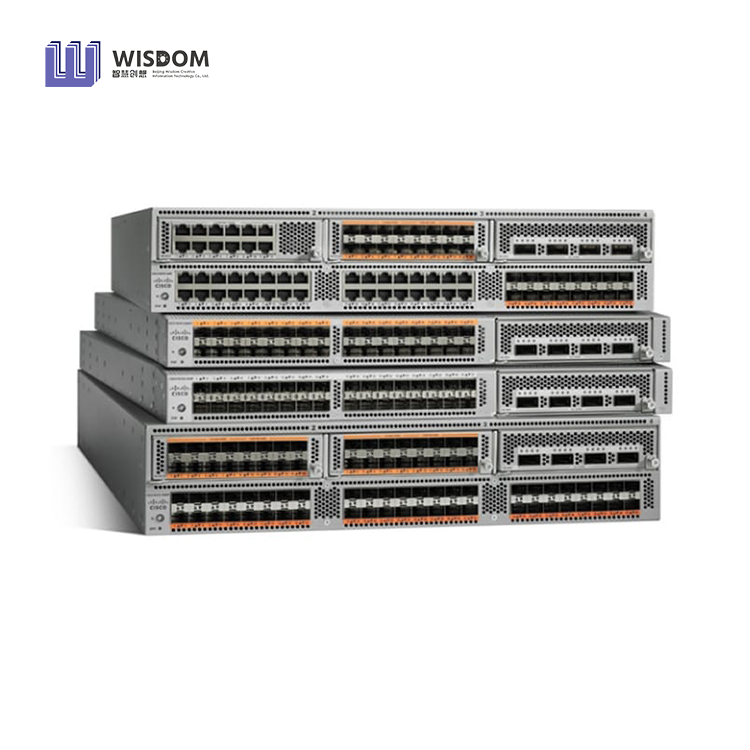
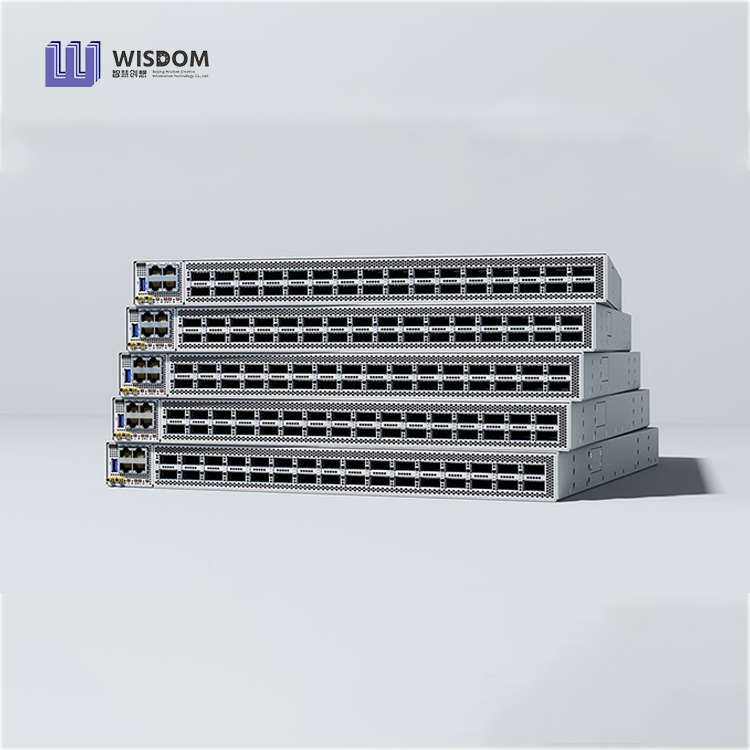
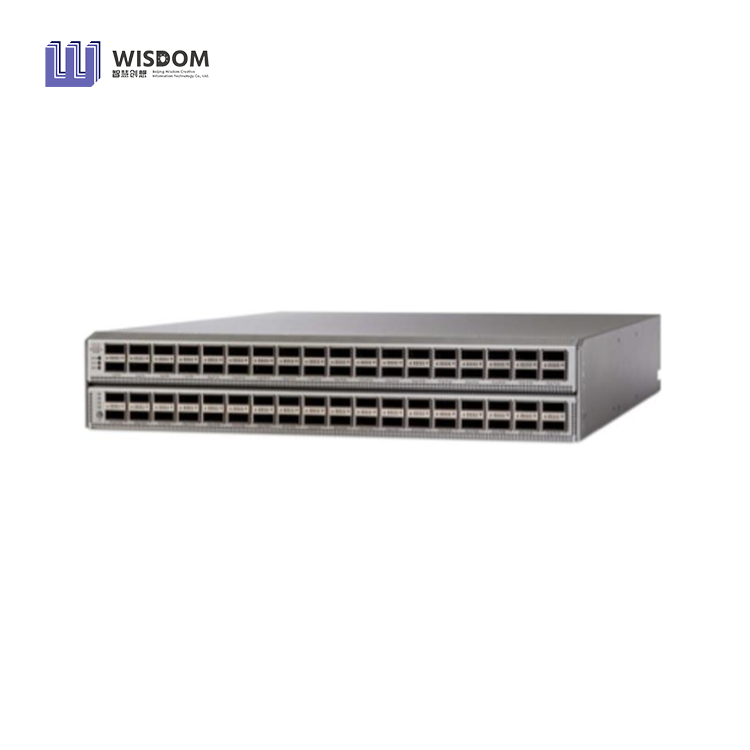
Cisco Nexus 9200 Platform Switches

Product overview

Built on the latest Cisco Cloud Scale technology, the Cisco Nexus 9200 platform consists of industry-leading ultra-high-density fixed-configuration data center switches with line-rate Layer 2 and 3 features that support enterprise and commercial applications, service provider hosting, and cloud computing environments. These switches support a wide range of port speeds with flexible combinations of 1/10/25/40/50/100-Gbps connectivity in compact form factors. Using the widely deployed industry-leading Cisco NX-OS Software operating system, the Cisco Nexus 9200 platform is designed for programmable fabric, which offers flexibility, mobility, and scale for service providers and Infrastructure-as-a-Service (IaaS) and cloud providers. It is also designed for the programmable network, which automates configuration and management for customers who want to take advantage of the DevOps operation model and tool sets.

  • Description
  • Features and benefits

Product overview

Built on the latest Cisco Cloud Scale technology, the Cisco Nexus 9200 platform consists of industry-leading ultra-high-density fixed-configuration data center switches with line-rate Layer 2 and 3 features that support enterprise and commercial applications, service provider hosting, and cloud computing environments. These switches support a wide range of port speeds with flexible combinations of 1/10/25/40/50/100-Gbps connectivity in compact form factors. Using the widely deployed industry-leading Cisco NX-OS Software operating system, the Cisco Nexus 9200 platform is designed for programmable fabric, which offers flexibility, mobility, and scale for service providers and Infrastructure-as-a-Service (IaaS) and cloud providers. It is also designed for the programmable network, which automates configuration and management for customers who want to take advantage of the DevOps operation model and tool sets.

Models

Table 1.summarizes the Cisco Nexus 9200 platform switch models.
Model
Description
Cisco Nexus 92348GC-X
48p 100M/1G Base-T ports + 4p 1/10/25G SPF28,+2p 40/100G QSFP28
Cisco Nexus 92348GC-FX3
48p 10M/100M/1G Base-T ports + 4p 1/10/25G SPF28,+2p 40/100G QSFP28
Cisco Nexus 92160YC-X Switch
48 x 1/10/25-Gbps SFP+ ports and 6 x QSFP28 ports
(4 of the 6 QSFP+ ports are 100Gbps capable ports)*
Cisco Nexus 92300YC Switch
48 x 1/10/25-Gbps SFP+ ports and 18 x 40/100-Gbps QSFP28 ports
Cisco Nexus 9272Q Switch
72 x 40-Gbps QSFP+ ports
Cisco Nexus 92304QC Switch
56 x 40-Gbps QSFP+ ports and 8 x 40/100-Gbps QSFP28 ports
Cisco Nexus 9236C Switch
36 x 40/100-Gbps QSFP28 ports

* Check support and port config uration details in Table 2.

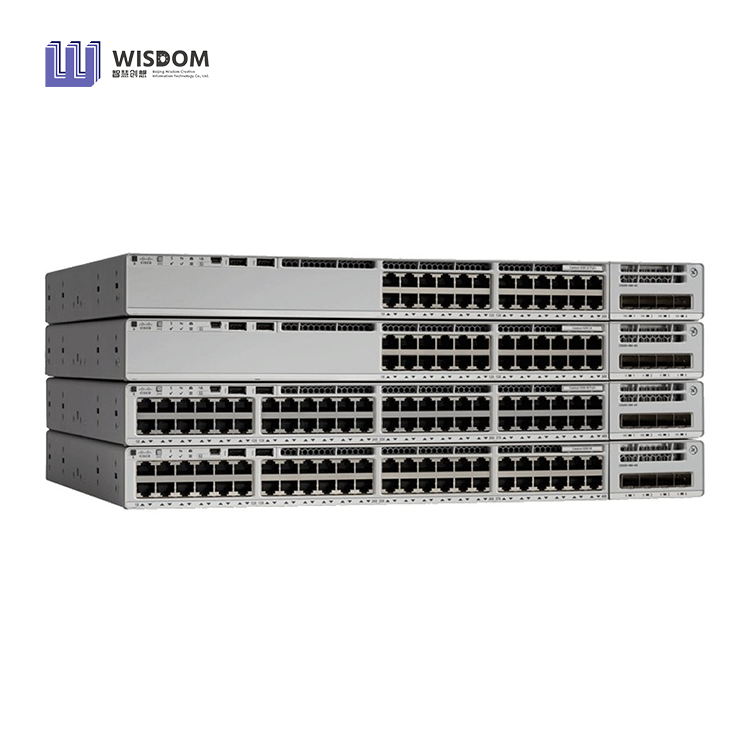
The Cisco Nexus 92348GC-X Switch (see Figure 1) is a 1RU switch based on Cisco Cloud Scale technology and supports 0.696 Tbps of bandwidth and over 517 mpps. The 48 1GBASE-T downlink ports on the 92348GC-X can be configured to work as 100-Mbps, 1-Gbps ports.The 4 ports of SFP28 can be configured as 1/10/25-Gbps and the 2 ports of QSFP28 can be configured as 40- and 100-Gbps ports. The
Cisco Nexus 92348GC-X is ideal for big data customers that require a Gigabit Ethernet ToR switch with local switching and for management switch use cases.1
Nexus_9200 (6).png
Figure 1. Cisco Nexus 92348GC-X Switch
The Cisco Nexus 92160YC-X Switch (Figure 2) is a 1-Rack-Unit (1RU) switch that supports 3.2 Terabits per second (Tbps) of bandwidth and over 2.5 billion packets per second (bpps). The 48-port downlink ports on the 92160YC-X can be configured to work as either 1/10/25-Gbps ports, offering deployment flexibility and investment protection. The uplink can support up to four 100-Gbps OR up to six 40-Gbps ports, or a combination of 10-, 25-, 40-, and 100-Gbps connectivity, offering flexible migration options. The switch has FC-FEC enabled for 25Gbps, and supports up to 3m in DAC connectivity. Please check Cisco Optics Matrix for the most updated support.

The Cisco Nexus 92348GC-X and the 92160YC-X can collect comprehensive Cisco Tetration Analytics telemetry information at line rateacross all ports without adding any latency to the packets or negatively affecting switch performance. This telemetry information is exported every 100 milliseconds (ms) by default directly from the switch’s Application- Specific Integrated Circuit (ASIC).
This information consists of three types of data:

● Flow information: This information contains information about endpoints, protocols, ports, when the flow started, how long the flow was active, etc.
● Interpacket variation: This information captures any interpacket variations within the flow. Examples include variation in Time
To Live (TTL), IP and TCP flags, payload length, etc.
● Context details: Context information is derived outside the packet header, including variation in buffer utilization, packet drops within a flow, association with tunnel endpoints, etc.

The Cisco Tetration Analytics platform consumes this telemetry data, and by using unsupervised machine learning and behavior analysis it can provide outstanding pervasive visibility across everything in your data center in real time. By using algorithmic approaches, the Cisco Tetration Analytics platform provides deep insights into applications and interactions, enabling dramatically simplified operations, a zero-trust model, and migration of applications to any programmable infrastructure.

Nexus_9200 (1).jpg
Figure 2. Cisco Nexus 92160YC-X Switch
The Cisco Nexus 9272Q Switch (Figure 3) is an ultra-high-density 2RU switch that supports 5.76 Tbps of bandwidth and over 4.5 bpps across 72 fixed 40-Gbps QSFP+ ports. Up to 35 ports on the 9272Q can be converted into a total of 140 x 10-Gbps ports.
Nexus_9200 (2).jpg
Figure 3. Cisco Nexus 9272Q Switch
The Cisco Nexus 92304QC Switch (Figure 4) is an ultra-high-density 2RU switch that supports 6.1 Tbps of bandwidth and over 4.8 bpps across 56 x 40-Gbps QSFP+ ports and 8 x 40/100-Gbps QSFP28 ports. Up to 16 ports on the 92304QC can be converted into a total of 64 x 10-Gbps ports.
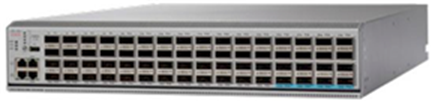
Nexus_9200 (7).png
Figure 4. Cisco Nexus 92304QC Switch
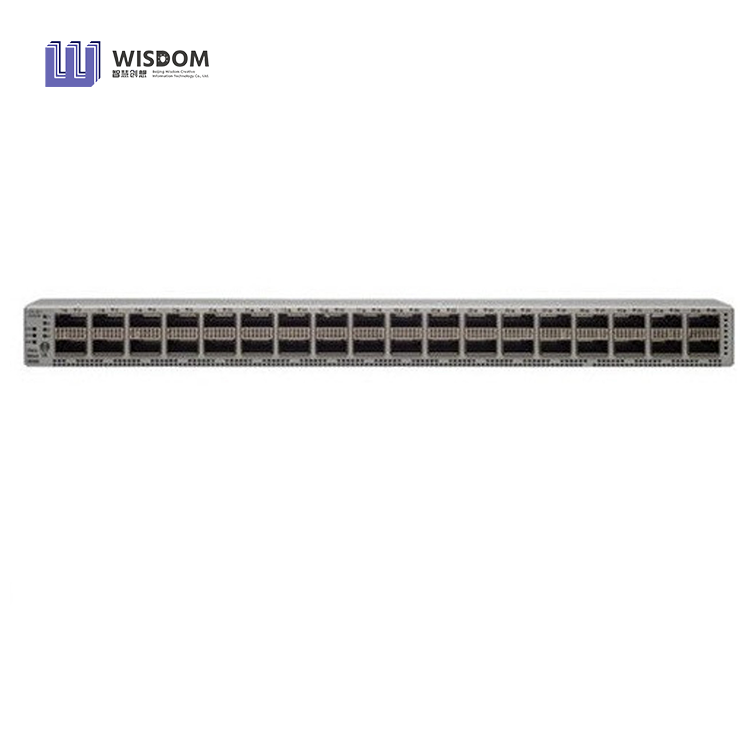
The Cisco Nexus 9236C Switch (Figure 5) is a 1RU switch that supports 7.2 Tbps of bandwidth and over 5.3 bpps across 36 100-Gbps QSFP28 ports. Each of the ports on the 9236C can be individually configured into 1x100Gbps, 1 x 40 Gbps, 4 x 10/25 Gbps, 2 x 50 Gbps or 1 x 1/10 Gbps using QSA adapter. It provides industry’s best density and flexibility needed for data center spine or aggregation connectivity, in a compact form factor.

Nexus_9200 (3).jpg
Figure 5. Cisco Nexus 9236C Switch
The Cisco Nexus 92300YC Switch (Figure 6) is a top-of-rack switch that supports 6.0 Tbps of bandwidth and over 4.75 bpps across 48 x 1/10/25-Gbps SFP28 and 18 x 40/100-Gbps QSFP28 ports. It is ideal for 25G sever access and 1:1 subscription networks, in a compact form factor. Customers can protect their investments by having high-density 25-Gbps and 100-Gbps speeds with flexible topology design. The switch has FC-FEC enabled for 25Gbps, and supports up to 3m in DAC connectivity.
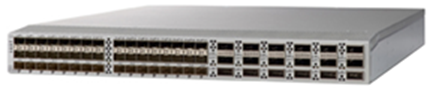
Nexus_9200 (8).png
Figure 6. Cisco Nexus 92300YC Switch
The Cisco Nexus 92348GC-FX3 Switch (see Figure 7) is a 1RU switch based on Cisco Cloud Scale technology and supports 0.696 Tbps of bandwidth and over 517 mpps. The 48 1GBASE-T downlink ports on the 92348GC-FX3 can be configured to work as 100-Mbps, 1-Gbps ports. The 4 ports of SFP28 can be configured as 1/10/25-Gbps and the 2 ports of QSFP28 can be configured as 40- and 100-Gbps ports. For detail list of features supported on Cisco Nexus 92348GC-FX3 refer to release notes.

Nexus_9200 (6).png
Figure 7. Cisco Nexus 92348GC-FX3 Switch
The Cisco Nexus 9200 platform provides the following features and benefits:

● High performance and scalability
◦ The platform provides wire-rate Layer 2 and 3 switching on all ports, with up to 7.2 Tbps and up to 5.35 bpps of bandwidth.
◦ With up to 40 MB of shared buffer, the platform is an excellent choice for scalable data centers and big data applications. The ability to fine tune buffer allocation for non-drop queues makes the Nexus 9200 an ideal platform for IP storage designs.
● Virtual Extensible LAN (VXLAN)
◦ The platform (except Cisco Nexus 92348GC-X and Cisco Nexus 92348GC-FX3 ) offers native line-rate VXLAN routing.
◦ The Border Gateway Protocol (BGP) Ethernet Virtual Private Network (EVPN) control plane provides scalable multitenancy and host mobility (refer to VXLAN Network with MP-BGP EVPN Control Plane for more information).
● Hardware and software high availability
◦ The 64-way Equal-Cost Multipath (ECMP) routing enables the use of Layer 3 fat-tree designs. This feature helps organizations prevent network bottlenecks, increase resiliency, and add capacity with little network disruption.
◦ Patching ensures undisruptive upgrade in most cases.
◦ The switches use hot-swappable Power-Supply Units (PSUs) and fans with N+1 redundancy.
● Purpose-built NX-OS operating system with comprehensive, proven innovations
◦ Open programmability supports built-in DevOps automation tools such as Puppet, Chef, and Ansible.
◦ Cisco NX-API supports a common programmatic approach across Cisco Nexus switches.
◦ Power-on autoprovisioning (POAP) enables touchless bootup and configuration of the switch, drastically reducing provisioning time.
◦ The onboard Python scripting engine enables automation and remote operations in the data center.
◦ Advanced buffer monitoring reports real-time buffer utilization per port and per queue, which allows organizations to monitor traffic bursts and application traffic patterns.
◦ Complete Layer 3 unicast and multicast routing protocol suites are supported, including BGP, Open Shortest Path First (OSPF),Enhanced Interior Gateway Routing Protocol (EIGRP), Routing Information Protocol Version 2 (RIPv2), Protocol Independent Multicast Sparse Mode (PIM-SM), Source-Specific Multicast (SSM), and Multicast Source Discovery Protocol (MSDP).
◦ Segment routing allows the network to forward Multiprotocol Label Switching (MPLS) packets and perform traffic engineering without Resource Reservation Protocol (RSVP) Traffic Engineering (TE). It provides a control-plane alternative for increased network scalability and virtualization.
The Cisco Nexus 9200 platform offers industry-leading density and performance with flexible port configurations that can support existing fiber cabling (Table 2).
Table 2. Cisco Nexus 9200 platform switches’ characteristics
Model
Cisco Nexus 92348GC-X
Cisco Nexus 92348GC-FX3
Cisco Nexus 92160YC-X
Cisco Nexus 9272Q
Cisco Nexus 92304QC
Cisco Nexus 9236C
Cisco Nexus 92300YC
Ports
48p 100M/1G Base-T ports + 4p 1/10/25G SPF28,+2p 40/100G QSFP28
48p 10M/100M/1G Base-T ports + 4p 1/10/25G SPF28,+2p 40/100G QSFP28
48 x 10- and 25-Gbps SFP+ and 6 QSFP+ ports (4 are 100-Gbps capable)
72 x 40-Gbps QSFP+ ports
56 x 40-Gbps QSFP+ and 8 100-Gbps ports
36 x 100-Gbps QSFP28 ports
48 x 10- and 25-Gbps SFP+ and 18 100-Gbps ports
Supported speeds
100M, 1 Gbps on Base-T ports and
1, 10, and 25 Gbps on SPF28 ports
40 and 100G Gbps on QSFP28
10M, 100M, 1 Gbps on Base-T ports and
1, 10, and 25 Gbps on SPF28 ports
40 and 100G Gbps on QSFP28
1, 10, and 25 Gbps on SFP+ ports
10, 25, 40, and 100 Gbps on QSFP ports
10 and 40 Gbps
10, 40, and 100 Gbps
1, 10, 25, 40, 50, and 100 Gbps
1, 10, and 25 Gbps on SFP+ ports
40 and 100 Gbps on QSFP ports
Port configuration
48p 100M/1G Base-T ports for downlinks;
1/10/25G for the 4 SFP28 ports
40/100-Gbps for the uplinks
48p 10M/100M/1G Base-T ports for downlinks;
1/10/25G for the 4 SFP28 ports
40/100-Gbps for the uplinks
48 x 10/25-Gbps ports for downlinks; 4 of the 6 uplink ports are 100-Gbps capable. Ports 50 and 52 can be individually configured
into 1 x 100 Gbps, 4 x 10 Gbps, 4 x 25 Gbps, 1 x 40 Gbps, or 2 x 50 Gbps.
72 fixed QSFP+ ports, with breakout of up to 140 x 10-Gbps ports
56 fixed QSFP+ ports, with breakout of up to 64 x 10-Gbps ports, plus 8 x 100-Gbps ports
36 fixed QSFP28 ports, with each being individually configured into 1 x 100 Gbps, 4 x 10 Gbps, 4 x 25 Gbps, 1 x 40 Gbps, or 2 x 50
Gbps ports
48 x 10/25-Gbps ports for downlinks; 100-Gbps for the uplinks
Telemetry support
Yes, SW only
Yes, SW only
Yes
-
CPU
4 cores
4 cores
2 cores
4 cores
4 cores
4 cores
2 cores
System memory
8 GB
32 GB
16 GB
16 GB
16 GB
16 GB
16 GB
Solid-State Disk (SSD) drive
16GB
128 GB
64 GB
64 GB
64 GB
64 GB
128 GB
Shared system buffer
40 MB
40 MB
20 MB
30 MB
30 MB
30 MB
30 MB
Management ports
2 ports: 1 RJ-45 and 1SFP
3 RJ-45 ports
3 RJ-45 ports
2 ports: 1 RJ-45 and 1SFP
USB ports
1
1
1
1
1
1
1
RS-232 serial ports
1
1
1
1
1
1
1
Power supplies (PSU - up to 2)
400W AC, 400/350W DC[1]
350W AC port-side intake and port-side exhaust
440W DC port-side intake and port-side exhaust
350W HVAC/HVDC dual direction
650W AC, 930W DC, or 1200W AC/HVDC
930W DC, 1200W AC, or 1200W HVAC/DC
650W AC, 930W DC, or 1200W HVAC/HVDC
930W DC, 650W AC, or 1200W HVAC/DC
650W AC 1200W HVDC (Roadmap)
Typical power* (AC)
150W
226W
10-Gbps mode: 150W
25-Gbps mode: 170W
310W
305W
275W
10G: 216W
25G: 260W
Maximum power* (AC)
245W
242W
475W
975W
720W
640W
603W
Input voltage (AC)
100 to 240V
100 to 240V
100 to 240V
100 to 240V
*PSU redundancy is not supported when used in 110V.
100 to 240V
100 to 240V
100 to 240V
Input voltage (HVAC)
200 to 277V
200 to 277V
200 to 277V
200 to 277V
200 to 277V
200 to 277V
200 to 277V
Input voltage (DC)
–40 to –72V DC (minimum and maximum) –48 to –60V DC (nominal)
–40 to –72V DC (minimum and maximum) -48 to –60V DC (nominal)
–40 to –72V DC (minimum and maximum) –48 to –60V DC (nominal)
Input voltage (HVDC)
192 to 400 VDC,
90 to 295 VAC
240 to 380V
240 to 380V
240 to 380V
240 to 380V
240 to 380V
240 to 380V
Frequency (AC)
50 to 60 Hz
50 to 60 Hz
50 to 60 Hz
50 to 60 Hz
50 to 60 Hz
50 to 60 Hz
50 to 60 Hz
Fans
3
3
4
2
2
4
4
Airflow
Port-side intake and exhaust
MTBF (hours)
474,571
283,670
379,400
397,090
401,060
399,300
365,610
Physical
(H x W x D)
1.72 x 17.3 x 18.5 in. (4.4 x 43.9 x 45.7 cm)
1.72 x 17.3 x 19.7 in.
(4.4 x 43.9 x 49.9 cm)
1.72 x 17.3 x 22.5 in. (4.4 x 43.9 x 57.1 cm)
3.5 x 17.4x 24.5 in. (8.9 x 44.2 x 62.3 cm)
3.5 x 17.5 x 22.5 in. (8.9 x 44.5 x 57.1 cm)
1.72 x 17.3 x 22.5 in. (4.4 x 43.9 x 57.1 cm)
2.00 x 17.2 x 22.3 in. (5.08 x 43.8 x 56.6 cm)
Acoustics
71.6 dBA at 50% fan speed, 75.7 dBA at 70% fan speed, and 81.0 dB at 100% fan speed
Port-side exhaust:
Fan speed at 40%:60.7dBA
Fan speed at 70%:71.9 dBA
Fan speed at 100%: 81.6 dBA
Port-side intake:
Fan speed at 40%:66.1 dBA
Fan speed at 70%:73.2 dBA
Fan speed at 100%: 79.6 dBA
51.9 dBA at 40% fan speed, 56.2 dBA at 70% fan speed, and 66.0 dB at 100% fan speed
61.2 dBA at 50% fan speed, 69.6 dBA at 70% fan speed, and 78.2 dB at 100% fan speed
57.9 dBA at 40% fan speed, 72.3 dBA at 70% fan speed, and 75.5 dB at 100% fan speed
58.8 dBA 40% fan speed, 65.3 dBA at 70% fan speed, and 69.6 dB at 100% fan speed
52.1 dBA at 40% fan speed, 62.0 dBA at 70% fan speed, and 71.5 dB at 100% fan speed
RoHS compliance
Yes
Yes
Yes
Yes
Yes
Yes
Yes

Get a Free Quote

Our representative will contact you soon.
Email
Mobile/WhatsApp
Name
Company Name
Message
0/1000

Get a Free Quote

Our representative will contact you soon.
Email
Mobile/WhatsApp
Name
Company Name
Message
0/1000

微信图标
cisco nexus 9200 platform switches-3