Enable Networks to be More Agile for Services
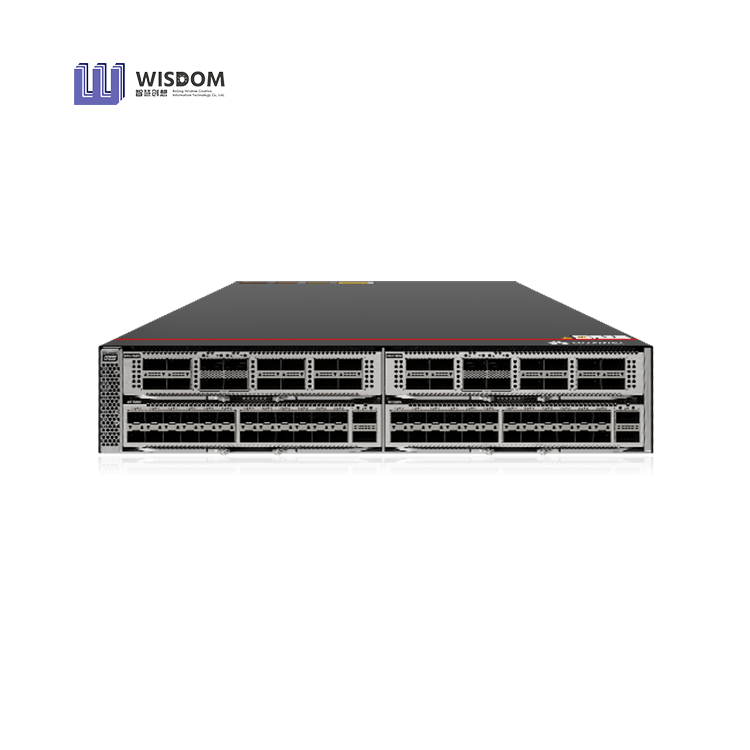
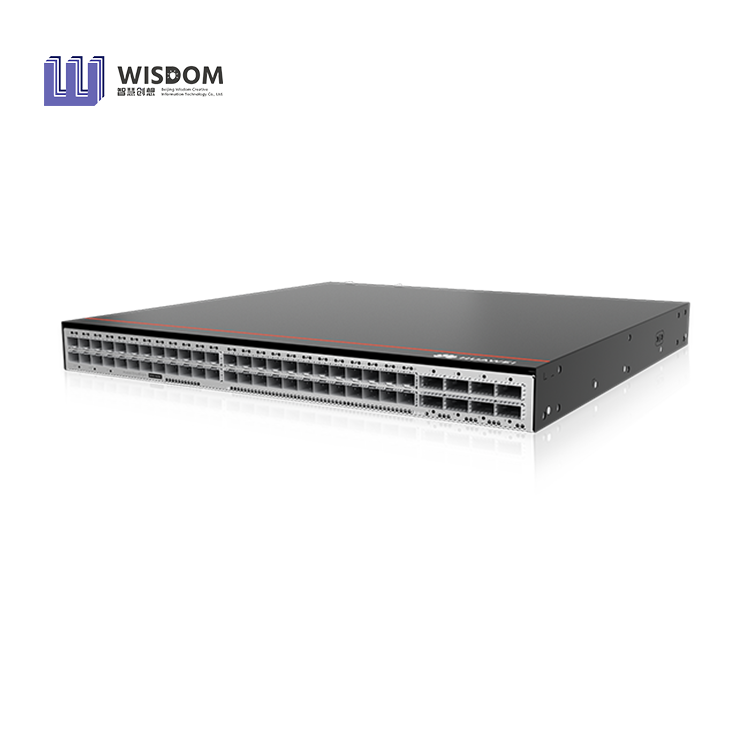
⚫ Built-in high-speed and flexible processor chips, with their flexible packet processing and traffic control capabilities,CloudEngine S6750-H series 10GE switches are close to services, meeting current and future challenges, and helping customers build scalable networks.
⚫ CloudEngine S6750-H series 10GE switches support fully customizing the forwarding mode, forwarding behavior, and search algorithm of traffic. New services are implemented through microcode programming. Customers do not need to replace new hardware and new services can be rolled out within six months
⚫CloudEngine S6750-H series 10GE switches provide open interfaces and user-defined forwarding processes to meet customized service requirements of enterprises. Enterprises can use multi-layer open interfaces to develop new protocols andfunctions independently. They can also hand over their requirements to vendors and jointly develop them to build an enterprise-dedicated campus network.
Delivering Abundant Services More Agilely
⚫ With the unified user management function, the CloudEngine S6750-H series 10GE switches authenticates both wired and wireless users, ensuring a consistent user experience no matter whether they are connected to the network through wired or wireless access devices. The unified user management function supports various authentication methods, including 802.1x,MAC address, and is capable of managing users based on user groups, domains, and time ranges. These functions visualize user and service management and boost the transformation from device-centric management to user experience-centric management.
⚫ The CloudEngine S6750-H series 10GE switches provide excellent quality of service(QoS) capabilities and supports queue scheduling and congestion control algorithms. Additionally, it adopts innovative priority queuing and multi-level scheduling mechanisms to implement fine-grained scheduling of data flows, meeting service quality requirements of different user terminals and services.
Fine-Grained Network Management and Visualized Fault Diagnosis
⚫ In-situ Flow Information Telemetry (IFIT) is an in-band Operations, Administration, and Maintenance (OAM) measurement technology that uses service packets to measure real performance indicators of an IP network, such as the packet loss rate and delay. IFIT can significantly improve the timeliness and effectiveness of network O&M, thereby promoting the development of intelligent O&M.
⚫ Three IFIT modes are available: application-level quality measurement, tunnel-level quality measurement, and native-IP IFIT measurement. Currently, CloudEngine S6750-H series 10GE switches support native-IP IFIT measurement only. By providing in-band measurement capabilities, CloudEngine S6750-H series 10GE switches can monitor indicators such as the delay and packet loss rate of service flows in real time. CloudEngine S6750-H series 10GE switches also offer visualized O&M capabilities to centrally manage and control networks and graphically display performance data. Designed with IFIT capabilities featuring high measurement precision and easy deployment, CloudEngine S6750-H series 10GE switches are ideal for constructing an intelligent O&M system and stand out with future-proof scalability.
Flexible Ethernet Networking
⚫ In addition to traditional Spanning Tree Protocol (STP), Rapid Spanning Tree Protocol (RSTP), and Multiple Spanning Tree Protocol (MSTP), the CloudEngine S6750-H series 10GE switches support Huawei-developed Smart Ethernet Protection (SEP) technology and the latest Ethernet Ring Protection Switching (ERPS) standard. SEP is a ring protection protocol specific to the Ethernet link layer, and applies to various ring network topologies, such as open ring topology, closed ring topology, and cascading ring topology. This protocol is reliable, easy to maintain, and implements fast service switching within 50 ms. ERPS is defined in ITU-T G.8032. It implements millisecond-level protection switching based on traditional Ethernet MAC and bridging functions.
⚫ CloudEngine S6750-H series 10GE switches support Smart Link and Virtual Router Redundancy Protocol (VRRP), which implement backup of uplinks. One CloudEngine S6750-H series 10GE switch can connect to multiple core switches through multiple links, significantly improving reliability of aggregation devices.
Mature IPv6 Features
⚫ The CloudEngine S6750-H series swithes are developed based on the mature, stable VRP and supports IPv4/IPv6 dual stacks, IPv6 routing protocols (RIPng, OSPFv3, BGP4+, and IS-IS for IPv6). With these IPv6 features, the CloudEngine S6750-H can be deployed on a pure IPv4 network, a pure IPv6 network, or a shared IPv4/IPv6 network, helping achieve IPv4-to-IPv6 transition.
Intelligent Stack (iStack)
⚫ CloudEngine S6750-H series 10GE switches support the iStack function that combines multiple switches into a logical switch. Member switches in a stack implement redundancy backup to improve device reliability and use inter-device link aggregation to improve link reliability. iStack provides high network scalability. You can increase a stack's ports, bandwidth, and processing capability by simply adding member switches. iStack also simplifies device configuration and management. After a stack is set up, multiple physical switches can be virtualized into one logical device. You can log in to any member switch in the stack to manage all the member switches in it.
Cloud-based Management
⚫ The Hua weis cloud management platform allows users to configure, monitor, and inspect switches on the cloud, reducing on-site deployment and O&M manpower costs and decreasing network OPEX.
VXLAN Features
⚫ VXLAN is used to construct a Unified Virtual Fabric (UVF). As such, multiple service networks or tenant networks can be deployed on the same physical network, and service and tenant networks are isolated from each other. This capability truly achieves 'one network for multiple purposes'. The resulting benefits include enabling data transmission of different services or customers, reducing the network construction costs, and improving network resource utilization.
⚫ This series switches are VXLAN-capable and allow centralized and distributed VXLAN gateway deployment modes. These switches also support the BGP EVPN protocol for dynamically establishing VXLAN tunnels and can be configured using NETCONF/YANG.
Link Layer Security
⚫ CloudEngine S6750-H series 10GE switches support MACsec. MACsec protects transmitted Ethernet data frames through identity authentication, data encryption, integrity check, and anti-replay protection, reducing the risks of information leakage and malicious network attacks. With MACsec, these switch models are able to address strict information security requirements of customers in industries such as government and finance.
Open Programmability System(OPS)
⚫ Open Programmability System (OPS) is an open programmable system based on the Python language. IT administrators can program the O&M functions of a switch through Python scripts to quickly innovate functions and implement intelligent O&M.
Intelligent O&M
⚫ This series switches provides telemetry technology to collect device data in real time and send the data to Huawei campus network analyzer(iMaster NCE-CampusInsight). The CampusInsight analyzes network data based on the intelligent fault identification algorithm, accurately displays the real-time network status, effectively demarcates and locates faults in a timely manner, and identifies network problems that affect user experience, accurately guaranteeing user experience.
Intelligent Upgrade
⚫ Switches support the intelligent upgrade feature. Specifically, switches obtain the version upgrade path and download the newest version for upgrade from the Huawei Online Upgrade Platform (HOUP). The entire upgrade process is highly automated and achieves one-click upgrade. In addition, preloading the version is supported, which greatly shortens the upgrade time and service interruption time.
⚫ The intelligent upgrade feature greatly simplifies device upgrade operations and makes it possible for the customer to upgrade the version independently. This greatly reduces the customer's maintenance costs. In addition, the upgrade policies on the HOUP platform standardize the upgrade operations, which greatly reduces the risk of upgrade failures.
 ×
×

 EN
EN