Software optimized for energy applications
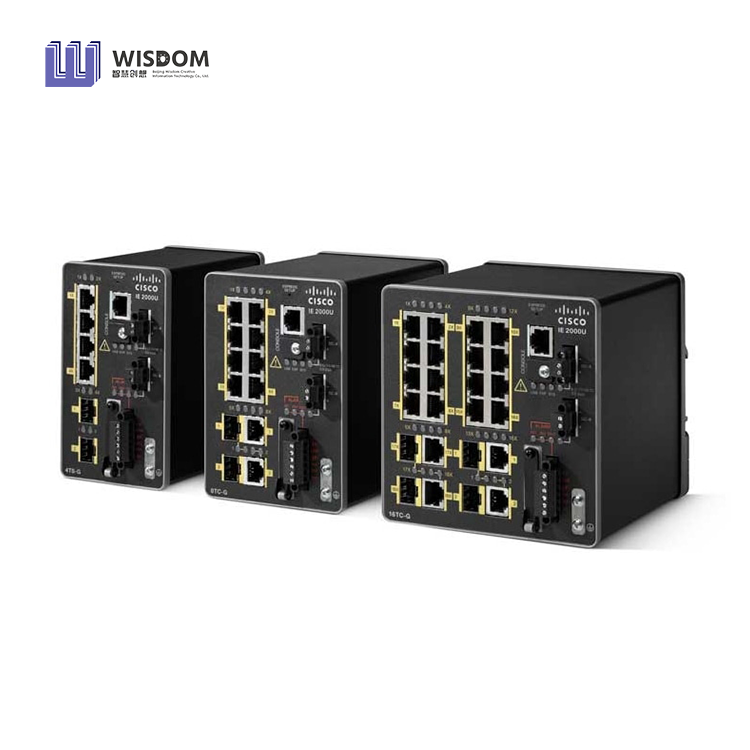
The IE 2000U software is optimized for energy applications and builds on the strength of Cisco IOS Software, which powers mission-critical networks across the world. Numerous new features make the IE 2000U the optimal Ethernet switch for energy network operators. For example, Cisco SmartPort templates can enable simple configuration for utility environments. Features such as Generic Online Diagnostics (GOLD) publish an event when critical failures are detected, and this can be retrieved from the switch.Also, OnBoard Failure Logging (OBFL) collects and logs information from critical sensors in the switch, monitoring voltage,temperature, and other information.
In addition, many default behaviors of the IE 2000U are different from those of traditional Ethernet switches, making the IE 2000U easier to configure, manage, secure, and troubleshoot.
High availability and redundancy
High availability is a vital requirement for networks that transport mission-critical data. The IE 2000U supports dual connections for power supplies, SFP modules, and the connected grid swap drive, which increases network uptime and reduces redeployment time in the field. In addition, external alarm inputs/outputs allow network operators to monitor changes in the switch's environmental conditions before a failure occurs.
To further increase high availability on a network-wide level, the IE 2000U offers PRP, REP and FlexLink for fast reconvergence,link-state tracking, IEEE 802.1w Rapid Spanning Tree Protocol (RSTP), and per-VLAN Rapid Spanning Tree Plus (PVRST+). These capabilities help to create redundant, failsafe topologies. Strong, built-in security helps prevent the device and the network from succumbing to malicious attacks, thereby enhancing network uptime.
Security
The wide range of security features on the IE 2000U protects mission-critical traffic, prevents unauthorized access, and maintains uninterrupted operation. The IE 2000U protects operational and nonoperational data by focusing on securing connectivity, defending against network threats, and providing trust and identity features.
Protecting a network begins with securing connectivity. For example, ACLs can be used to restrict access to sensitive portions of the network. To defend against network threats such as Dynamic Host Configuration Protocol (DHCP) spoofing, DHCP snooping can be used to allow only DHCP requests (but not responses) from untrusted user-facing ports. Workforce management is a critical use case, where trust and identity features such as IEEE 802.1x can be used to facilitate strong security policies, yet provide maximum mobility to a remote workforce.
Table 2 lists these and other primary features of the security solution.
Table 2. Primary features for each area of comprehensive security solution
 ×
×

 EN
EN