 ×
×
This year, Dell Technologies' storage portfolio has been full of highlights. First, ObjectScale received a major upgrade to version 4.0, expanding possibilities in hybrid cloud, unstructured data management, and flexible deployment. Later, PowerScale was officially certified by the NVIDIA Cloud Provider (NCP) program, further solidifying Dell's leadership in intelligent infrastructure.
However, many users, like us, have a question: Both have similar names but belong to different product lines. What are the actual differences in performance and characteristics between these "good brothers"? How should users choose based on their actual business needs?
Today, this article will help you quickly understand the key selection points for both.
PowerScale & ObjectScale: Performance and Characteristics Comparison
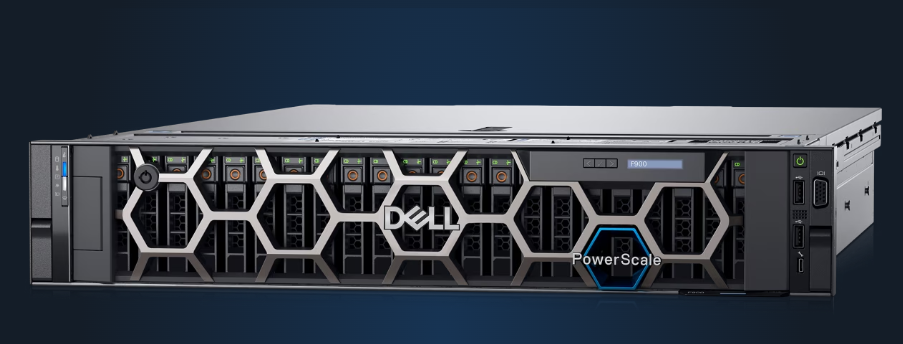
Dell PowerScale is Dell Technologies' scale-out NAS (file storage) platform, formerly known as Isilon. Its core operating system, OneFS, can manage massive unstructured data through a unified file system/single namespace.
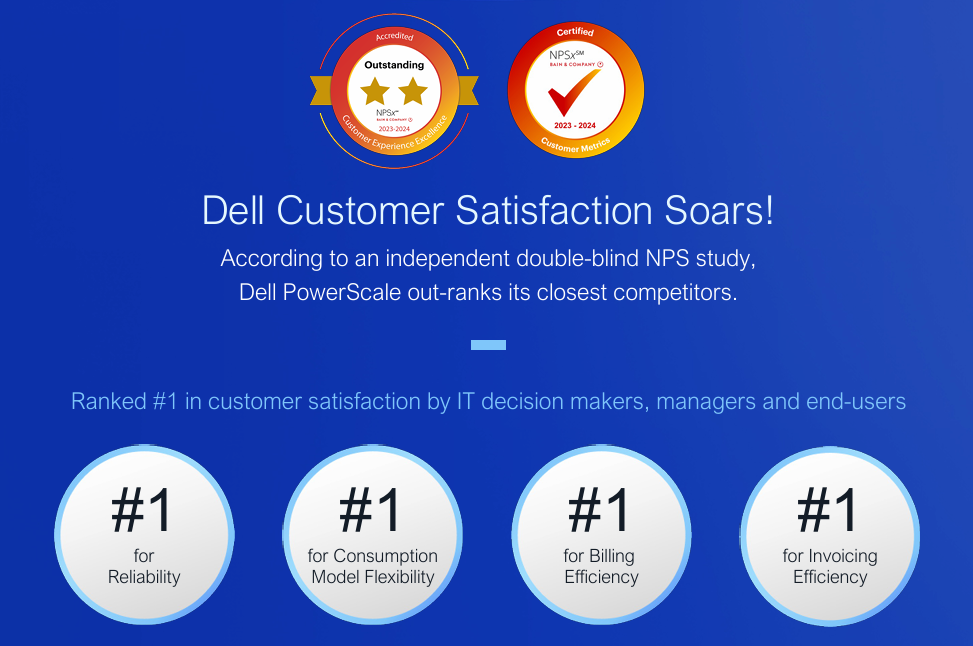
Thanks to its powerful scale-out capabilities and multi-protocol support, PowerScale is ideal for scenarios like file sharing, collaboration, and high-concurrency read/write operations. It is trusted by numerous customers and has achieved top rankings in independent double-blind NPS surveys.
Dell ObjectScale is Dell Technologies' new generation of software-defined object storage systems. Its predecessor is the leading object storage platform ECS. With the rising demand for cloud-native and object storage, starting from version 4.0, Dell Technologies integrated ECS into the same product line and released its hardware versions, ObjectScale XF960 and XF560.
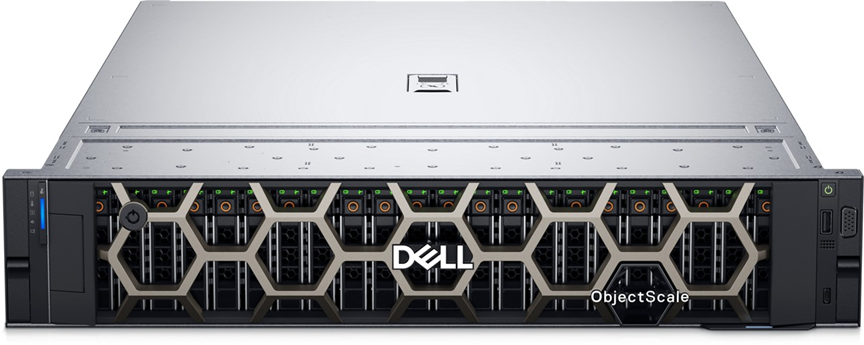
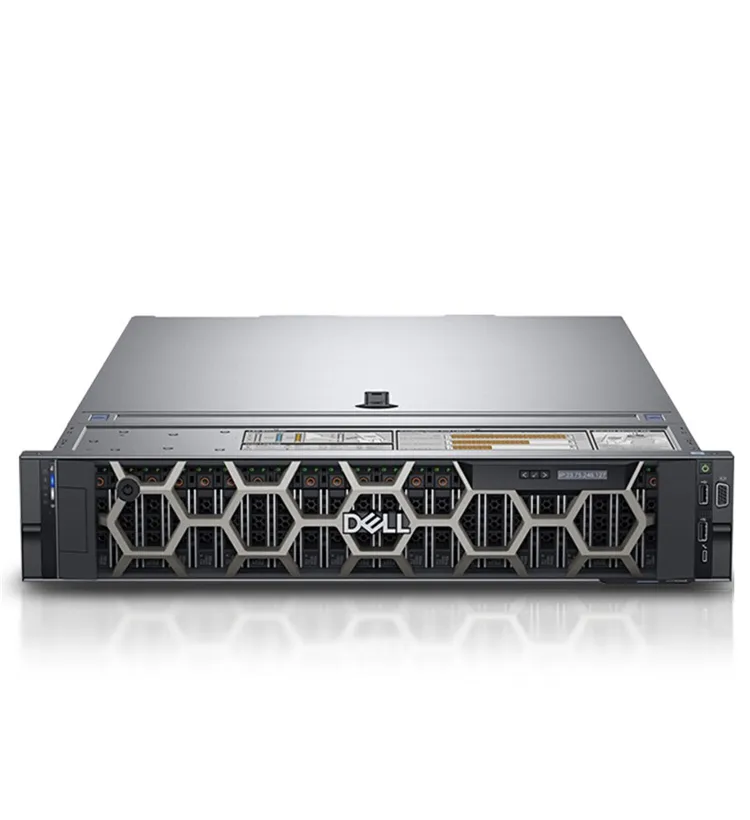
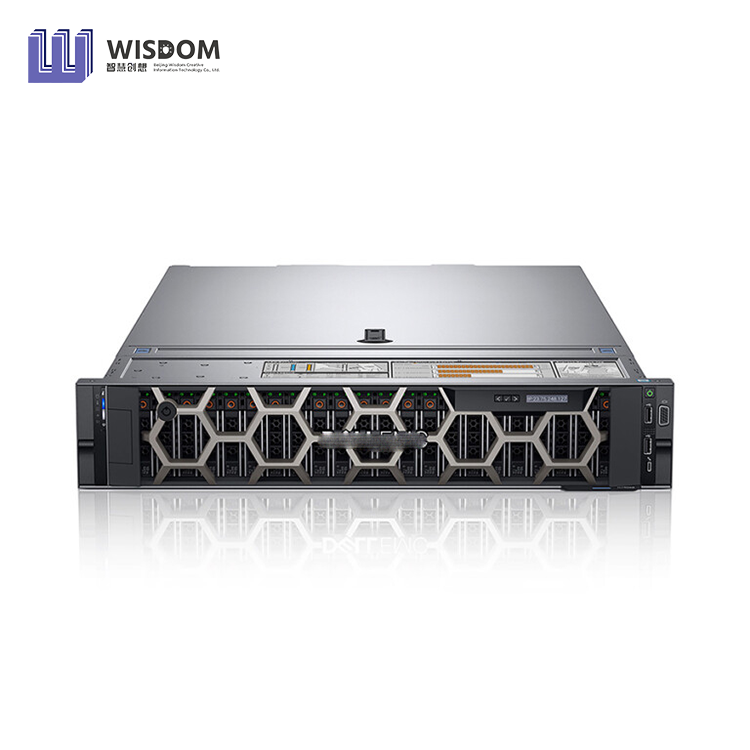
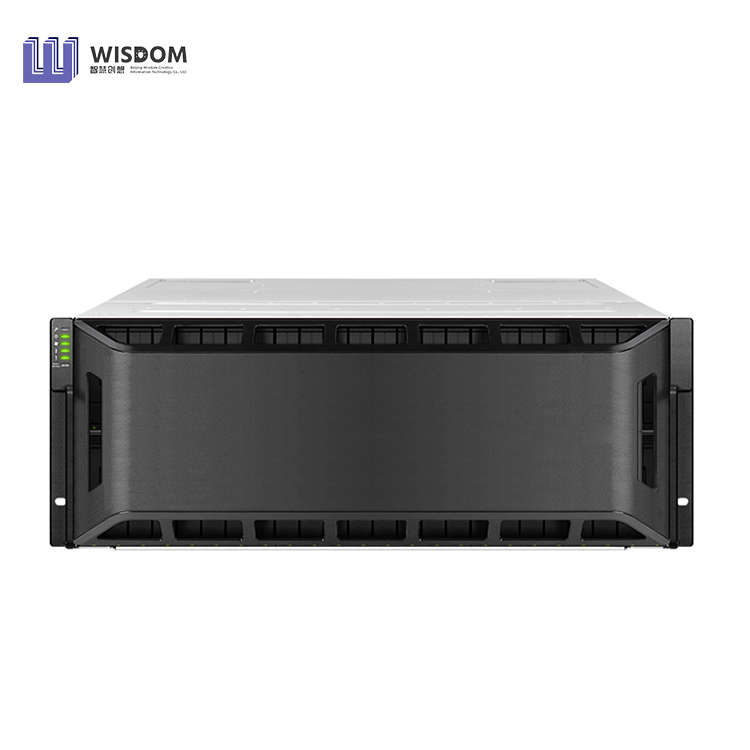
Dell ObjectScale XF960
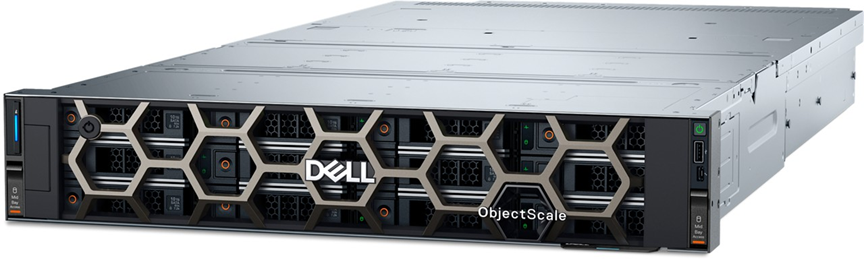
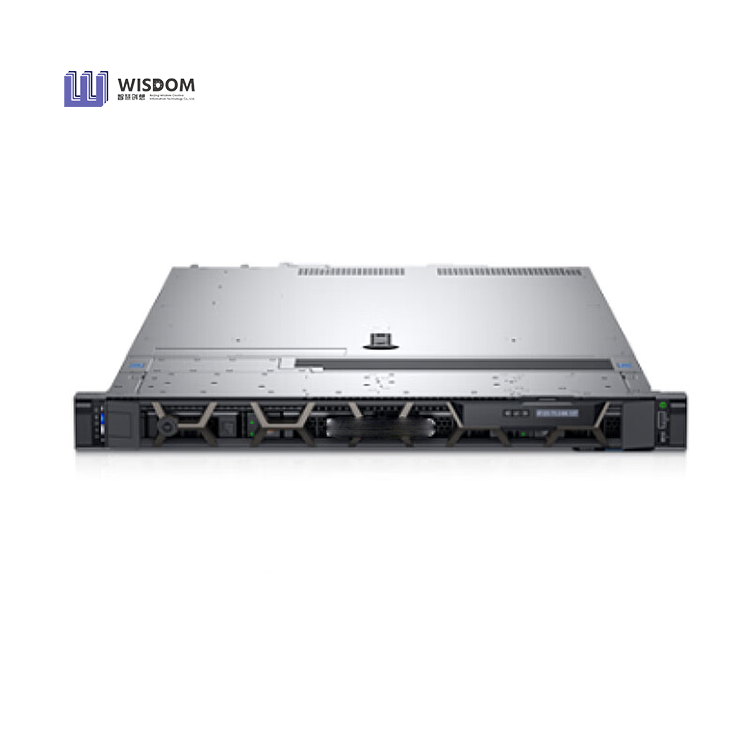
Dell ObjectScale X560
For existing ECS customers, Dell Technologies provides an in-place data upgrade path to upgrade systems to ObjectScale 4.0 free of charge. It can be said that ObjectScale 4.0 represents a comprehensive innovation for the ECS system, both in software and hardware.
As a product that has helped Dell Technologies maintain its leader position for nine consecutive years in the Gartner® Magic Quadrant™ for Distributed File Systems and Object Storage, ObjectScale is highly favored by enterprises for its powerful cloud-scale scalability, modern architecture, and cost optimization.
From this, we can see the core difference lies in their positioning: PowerScale focuses on file storage (NAS), while ObjectScale specializes in object storage.
1. From a Storage Type Perspective:
PowerScale specializes in file storage (NAS), supporting file protocols including NFS and SMB. It also offers additional support for some object access.
For tasks like model training and inference, this means PowerScale can be mounted directly like a local folder, eliminating the need for complex data migration or format conversion.
ObjectScale specializes in object storage, supporting the S3 protocol compatible with most modern and cloud-native applications. It also supports features like multi-tenancy and multi-site replication, providing a flat or global namespace. These characteristics make it widely suitable for application scenarios like archiving, backup, and digital content repositories, where access frequency and performance requirements are less stringent.
2. From an Architecture Perspective:
PowerScale is built on OneFS, forming a fully distributed single file system. Files and directory structures are distributed across nodes, offering rich file functionality.
ObjectScale is primarily based on a microservices architecture, managing data by objects/chunks. It is optimized for capacity, throughput, and cost, making it suitable for modern cloud-native platforms deploying open hybrid cloud strategies.
3. From a Performance Perspective:
PowerScale excels in file access, random read/write operations, small file processing, and consistency.
Furthermore, as the first storage platform certified by NCP, the OneFS operating system delivers extremely high aggregate bandwidth and very low latency. It is particularly suitable for file semantic applications requiring high concurrency, low latency, and high bandwidth, such as model training workloads where multiple GPU nodes need to simultaneously read massive numbers of files of varying sizes at high speed.
ObjectScale is better at handling high-throughput, highly parallel object read/write operations and large-scale data lake training tasks. For scenarios requiring long-term, secure, and low-cost storage of large amounts of data, ObjectScale's erasure coding technology and cost optimization capabilities offer high cost-effectiveness.
4. From Scalability and Cost-Effectiveness Perspective:
PowerScale can scale out to PBs or more, featuring plug-and-play expansion where new nodes can be brought online in about a minute with simple steps. It offers better cost-effectiveness in large file and file sharing scenarios.
ObjectScale offers higher spatial elasticity, easily supporting scaling from very small to extremely large scales (from TBs to EBs), with a minimum service reserved capacity as low as 25TB. It is more suitable for globally distributed, cloud-native applications and can reduce costs by up to 76% compared to public cloud.
In summary, if your business primarily uses NFS/SMB/HDFS protocols, emphasizes file throughput and performance with mixed file sizes, and requires consistently high bandwidth and low-latency data access, PowerScale is the more suitable choice.
If you mainly handle object storage workloads, such as massive unstructured/semi-structured data or data lake construction, and need to balance performance and cost on a global scale, ObjectScale would be the better solution.
PowerScale & ObjectScale: Typical Application Scenarios Analysis
Of course, listing these parameters can be overwhelming. If the performance metrics still sound abstract, let's further understand them through practical scenarios.
As a specialist in file storage, PowerScale's most representative workload scenarios are undoubtedly video production and enterprise multi-file sharing and collaboration.
Examples include video editing, special effects rendering, and media workflows. These tasks often require multiple users to access the same directory simultaneously, placing high demands on storage capacity, bandwidth, and concurrency capabilities.
Furthermore, for multinational companies, enabling smooth sharing of documents and design files globally requires providing sustained high-efficiency support in data movement and access.
This is why Lightstorm Entertainment chose Dell PowerScale as the core storage during the production of Avatar: The Way of Water.

Leveraging the high concurrent read/write capabilities, fine-grained permissions, and snapshot features of the OneFS system, it successfully supported the sharing and scheduling of 750 million live files across 8 global sites.
Additionally, PowerScale is also well-suited for scenarios like software development (e.g., source code compilation) and medical imaging (PACS) archiving, which involve processing large numbers of small files and require high compatibility.
Specializing in object storage, ObjectScale excels with large-scale, massive unstructured data, and cloud-native/AI workloads. It is commonly found in financial, government, and scientific research institutions for big data analysis and long-term archiving scenarios where both performance and cost are considerations.
This is why Emirates NBD Bank in Dubai, UAE, chose Dell ObjectScale (formerly ECS). Leveraging its near-limitless scalability, the bank can meet the five-year log storage compliance requirements in a more economical and efficient manner.

Currently, the bank uses ObjectScale to securely store massive amounts of business and customer data. Approximately 80% of its workloads run on the ObjectScale cloud tier, and the backup window has been reduced by 30%.
Ali Rey, Group Technology Platform Lead at Emirates NBD, said: "Dell ObjectScale enables us to securely store large amounts of data on-premises and quickly search through this data."
Conclusion
The key to selection lies in matching the business needs: Are file protocols or object interfaces required? Is performance priority or elastic scalability more important? Only by clearly identifying the requirements can one choose the most suitable storage solution.
In this regard, Dell Technologies, with its mature technology and comprehensive storage portfolio, provides reliable support for different scenarios, helping you steadily advance towards a data-driven future.
 Hot News
2025-02-28
2025-02-27
2025-02-26

 EN
EN